Digitizing deviation forms gives FrieslandCampina greater insight and certainty
“We now have certainty that deviations are followed up and insight into trends.”
Sebastiaan Udink
Continuous Improvement Specialist
“Previously, a sample container would get a label and the corresponding form or email had to be tracked down. Now every form gets a number that corresponds with the sample container, so nothing gets lost.”
Sebastiaan Udink
Continuous Improvement Specialist
“Operators who had been working on the shop floor for years didn’t immediately see the added value. But now that everyone can see what the system delivers, it has become standard practice.”
Sebastiaan Udink
Continuous Improvement Specialist
For years, process deviations at FrieslandCampina Lochem were recorded in all kinds of ways. From emails to forms collected in a box. With ELICIT, they are digitizing this into one clear process. And it delivered immediate results. Continuous Improvement Specialist Sebastiaan Udink: “We now have certainty that deviations are followed up and insight into trends.”
Paper, emails and a box full of reports
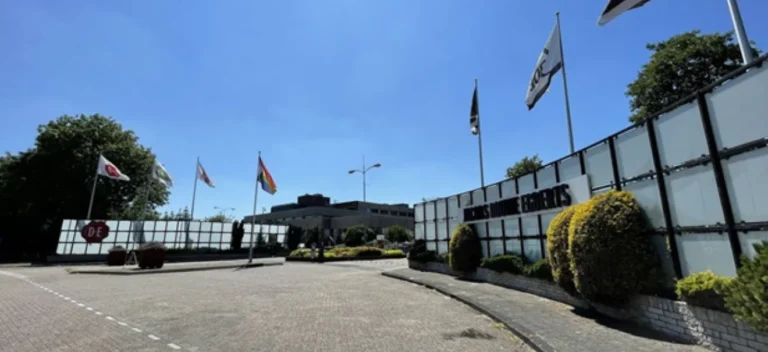
FrieslandCampina Lochem consists of two factories: a butter and butter oil factory and a milk powder factory. One organization, but sometimes with different ways of working. This was the case, for example, when recording process deviations. At one factory, operators reported deviations by email: when a deviation occurred, a message was sent to Quality Management and the Operations Office so that pallets could be blocked. The other factory worked entirely on paper. These forms were later entered into a system, while the paper versions were stored in a box.
It worked, but not optimally. “We lacked an overview,” says Sebastiaan Udink. “Who submitted which reports? Which shifts? How often? We also wanted to move towards one uniform system that everyone could work with.”
First building it themselves, then choosing ELICIT after all
Sebastiaan initially chose to develop his own solution. He built an app that worked, but quickly discovered the downside: Who maintains the software? Who provides support when issues occur? And who understands the technology when I leave? Then a colleague pointed him towards ELICIT’s forms functionality.
“Operators were already using ELICIT’s knowledge models on the shop floor for process control and resolving deviations. Shortly afterwards, ELICIT demonstrated the functionality live, and it turned out to be a very good fit. The way of working was already familiar, and you have the assurance of a professional provider that manages and continuously develops the software, so taking this step felt like the logical choice.”
Digitize forms
Together with knowledge analyst Milou, and with input from Quality Assurance, Sebastiaan developed digital forms for three situations. A separate KAV was created for each factory, the quality deviation form operators use to report a deviation. They also started developing an AOF, a request form that technologists can use, for example, to request sample testing.
The KAV was the first to go live, starting in the butter factory. It has been fully in use there since May. The powder factory is expected to follow in the autumn. Implementation of the AOF will follow afterwards.
Fast, clear and traceable
The digital quality deviation form makes reporting deviations easier than ever, says Sebastiaan. “Operators used to have to write everything out manually. Now they use drop-down menus for products, production lines, departments and people involved. Operators only need to describe the deviation itself, and they can do that on a tablet as well, including photos of the deviation.”
The relevant departments are also automatically notified by email once the report has been submitted. The person who submitted it can then track the status of the form, from “in progress” to “completed”. Through a dashboard, the factory can see where most deviations occur and which products are involved. “This gives you much more insight into how deviations are handled and what causes them.”
There is also a direct link to ELICIT’s knowledge models. When a knowledge model identifies a deviation, it directs the operator straight to the correct form. This means that after reading an instruction, the operator can immediately complete the corresponding form without having to search for it elsewhere.
The digital request form also makes laboratory requests more efficient. “Previously, a sample container would get a label, and the corresponding form or email had to be tracked down. Now every form gets a number that corresponds with the sample container, so nothing gets lost. Every morning, the lab manager can see at a glance which tests are still outstanding and follow up on them immediately.”
A permanent place in the organization
Digitizing the forms gives FrieslandCampina greater control over how process deviations are handled and potentially prevented. Paper forms no longer circulate, and everyone knows exactly how the follow-up process works. “This uniform way of working is also valuable: operators at the powder factory, who until recently were still working with paper, will immediately understand how the system works once it is introduced there.”
And just like ELICIT’s knowledge models, the digital quality deviation form has also been embraced on the shop floor. “It’s great to see. Operators who had been working on the shop floor for years didn’t immediately see the added value. But now that everyone can see what the system delivers, it has become standard practice.”