JDE Joure: Fewer inquiries and less downtime, higher efficiency
“When I showed the old system to a new operator, it was difficult. But in ELICIT, you can click on a specific component and immediately see the relevant information. That is much easier.”
Jan Jonkers
Operator with over thirty years of experience
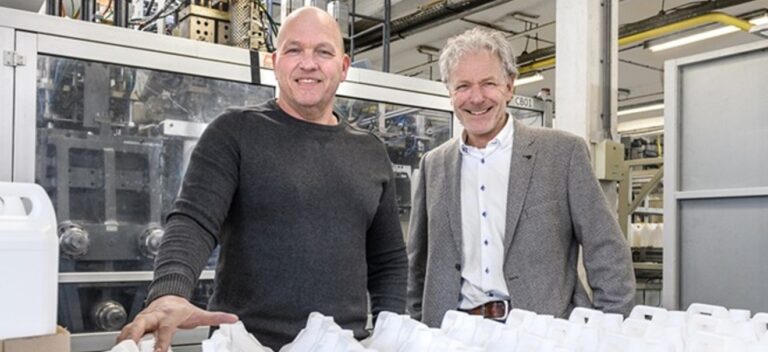
“What helps me enormously as a team leader is that it includes a testing functionality,” says Van Dijk. “I can test the practical knowledge of employees and therefore provide them with better guidance. I can see where they might still need some support and respond accordingly.”
Raymond van Dijk
Team Leader
JDE Joure is part of JDE Peet’s, producer of Douwe Egberts coffee, L’Or, and Pickwick tea, among others. We helped them capture the knowledge of experienced operators and make it accessible to other employees, resulting in increased efficiency and reduced downtime.
High dependency on experienced personnel
Within the JDE coffee factory in Joure is the Liquid Packaging department. This is where a liquid coffee solution for the hospitality industry is packaged. In the event of a malfunction or problem in the Liquid Packaging department, operators were not always able to resolve it independently. A few highly experienced operators possess the necessary knowledge, as do the team leaders and the production manager. As a result, they were frequently overstretched when problems arose. Additionally, JDE wanted to increase the efficiency of this packaging line.
A user-friendly solution for practical application
The fact that operators have been able to find solutions themselves since the introduction of ELICIT makes the biggest difference, says Jan Jonker. As an operator, he has more than thirty years of experience. “Colleagues can now troubleshoot more independently.”
The ease with which operators can look up solutions in ELICIT is a key factor. “We already had a system containing work instructions, but ELICIT is much more user-friendly,” says Raymond van Dijk, team leader at JDE. Jan Jonker, who has been with JDE for over thirty years, adds: “When I showed the old system to a new operator, it was difficult. But in ELICIT, you can click on a specific component and immediately see the relevant information. That is much easier.”
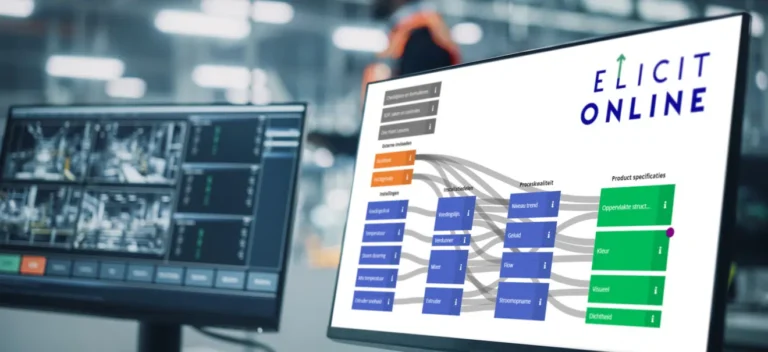
The knowledge model also provides insight into the cause-and-effect relationships of various parameters. For example, an operator can see whether a quality issue is related to a specific setting or even an external factor, such as the quality of the supplied packaging.
By capturing the twenty most important settings in the knowledge file, a clear role definition has also emerged. An operator now knows which “knobs/settings” they are permitted to adjust and which tasks they should leave to the Technical Service or Engineers. The ability to include photos and videos in the knowledge model helps with this. “A picture is worth a thousand words,” Jonker agrees.
In the first month, we had 400 clicks. In the following month, it was already 1,800. Our operators are enthusiastic – Jan Jonker, operator
“What helps me enormously as a team leader is that it includes a testing functionality,” says Van Dijk. “I can test the practical knowledge of employees and therefore provide them with better guidance. I can see where they might still need some support and respond accordingly.”
With ELICIT, I can test the practical knowledge of employees. This allows me to guide and train them better – Raymond van Dijk, team leader
Fewer inquiries, less downtime, more time
With the knowledge model of the packaging line, JDE has captured the most important knowledge of and for operators. Operators can now easily diagnose problems themselves and see immediately how to resolve the issue in ELICIT. As a result, they only call upon the most experienced employees when absolutely necessary. Senior operators and the production manager are less burdened.
“Where is the greatest gain? Fewer inquiries and shorter downtimes. We reach solutions faster and see fewer quality deviations,” says Van Dijk. Because problems are resolved more quickly, the efficiency of the production environment also increases.
He expects JDE to see the improved efficiency reflected in the figures in 2025. Jonker adds: “Unplanned stops are significantly shorter. We can resolve problems sooner, which means major, long-term malfunctions occur less frequently.”