When the Master Departs: How CONO Captures Half a Century of Cheesemaking Knowledge
“We are now moving from resolving malfunctions to preventing malfunctions and deviations”
“Pieter knew all the ins and outs of the cheesemaking process. As his retirement approached, we thought: how do we retain the knowledge he acquired over more than 50 years?”
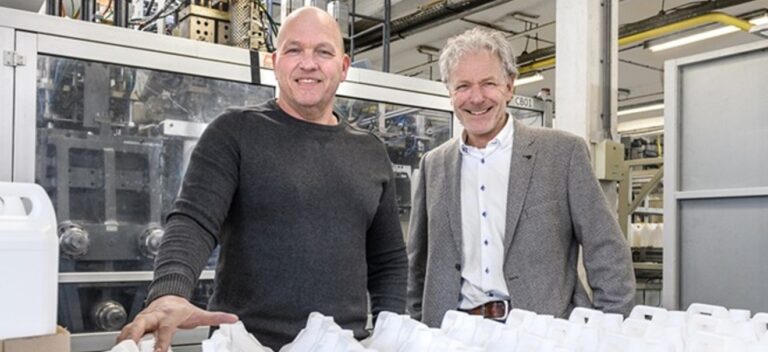
Arthur van Esveld
Production Manager, CONO
“Operators are now also taking ownership of the process”
Mike Koster
Cheesemaking Team Leader
The retirement of team leader Pieter (50.5 years of experience) confronted cheesemaker CONO with a significant challenge: how do we ensure that the knowledge of such experienced people is preserved? Arthur van Esveld, Production Manager, and Mike Koster, the new Cheesemaking Team Leader, explain: “With ELICIT, every operator has autonomy.”
Making Cheese: Far From Easy
Cheesemaking is far from simple, as they know better than anyone at CONO. The producer of Beemster Cheese, among others, has been working on the perfect method for 125 years. “But you are dependent on many factors,” explains Mike Koster. “Feed for cows varies by season, which in turn leads to different milk. The climate in the factory affects your product. At the same time, time pressure is high; a half-hour standstill is already reflected in the cheese. There are many fine nuances.”
Everything in the Heads of a Small Group
Cheesemakers learned those fine nuances by doing—by watching, listening, smelling, making mistakes, and adjusting over many years. Until they knew exactly when to turn that one specific knob. Team leader Pieter was one such person. “He had worked in the factory for more than 50 years,” says Mike. “Together with a few other colleagues, he knew all the ins and outs of the cheesemaking process. Whenever a deviation or malfunction occurred, colleagues would call him. So when his retirement approached, we thought: how do we retain the knowledge he acquired in 50 years?”
Securing Knowledge with ELICIT
Production Manager Arthur van Esveld came into contact with ELICIT through Herman Ouwerkerk. “With them, we discovered that we could capture the overload of information that Pieter possesses in a practically applicable way,” says Arthur.
Knowledge Analyst Milou interviewed Pieter and other experienced employees about their daily working methods. Not the standard instructions, but specifically the implicit knowledge they built up over years. The personal assessments, the handy tricks, the essential parameters they pay attention to.
Arthur: “Milou processed this using the ELICIT method into a knowledge file: an interactive model with directly applicable knowledge for the shop floor. There were interim evaluations, with opportunities to further customize the model. As a result, the model was well-aligned with our requirements and was immediately deployable on the shop floor. This was instantly appreciated by the operators who used it.”
First the Tool, Then the Cultural Change
Nevertheless, the ELICIT model was not received with cheers everywhere, Arthur and Mike admit honestly. “There was some skepticism. From the technologists, we heard: ‘Haven’t we written all of this down a long time ago?’. Experienced operators said: ‘Yes, I know all of this already.’ Others were afraid they would be replaced by a system. That is something you have to push through.”
Some things had indeed already been recorded, but specifically what someone with 50 years of experience does during deviations and malfunctions had not. “Your milk won’t curdle. How do you handle that when you don’t have time to dive into the manuals? The time factor makes it challenging. The ELICIT model can be used directly in practice at such a moment.”
Mike and Arthur therefore put ELICIT on the agenda time and again, explaining how the program could specifically help operators in their daily work.
The shift followed: “The young operators who are still in training saw the added value. The more experienced operators followed later. What stood out was that experienced people not only used the tool but also made suggestions to improve the content. In every shift, there was actually one experienced operator who did that. People were taking ownership of the process, which was great to see.”
The Result: Autonomy and Future-Proofing
Hard results are still difficult to measure after a few months, but the manager and team leader are already seeing the first differences emerge. Arthur sees that the organization is learning. “In ELICIT, actions for deviations are explained very clearly: in this situation, you must go through these specific steps. Especially in the beginning, we sometimes forgot steps or made wrong choices because we didn’t look at the system. Then we said: if you had used the system, you would have seen that you skipped this step.”
As a result, the self-reliance of operators is growing by the day. Mike Koster: “Operators are gaining autonomy. Not just the small group of knowledge holders, but everyone. Including the new people. That is of enormous value for the future. In the coming years, we will lose even more experienced knowledge holders who have worked at CONO for decades. In that case, such a knowledge base is very useful for quickly familiarizing new employees.”
The Next Steps
Now that the pilot in the cheesemaking department has proven successful, CONO is taking it a step further. A knowledge model is being developed for milk processing, and the existing model in the cheesemaking department is becoming ‘data-driven’. “In this process, we link live data from our systems directly to the model. This provides operators with bite-sized information: pay attention to this parameter, it is drifting, and that will affect your quality in this way. This allows us to take the next step: not just resolving malfunctions faster, but actually preventing a malfunction or deviation from ever occurring.”