Too few experienced operators on the line? This is the effect on your OEE
In many factories, we see the same pattern: a line’s OEE lags behind, despite all efforts. Quality deviations accumulate, malfunctions are resolved too late, and deliveries come under pressure. Often, the cause is not technical, but rather a lack of experience on the line.
What happens on the floor
An experienced operator knows the machine inside out. They recognize deviations early. They know what to do in the event of a malfunction. But what if he or she is not there? Then the line runs less stably. Small deviations go unnoticed longer, and malfunctions last longer. Quality loss is only discovered after packaging. And meanwhile:
- Production comes to a standstill
- A team leader has to step in
- Complaints arrive from customers or sales
The impact
The effect is not only reflected in the figures. You also notice it in:
- Unrest on the floor
- Frustration among colleagues
- More consultation, less production
A quick calculation demonstrates it:
If one 40-minute malfunction costs an average of 80 products and this happens three times a week, it results in a loss of more than 12,000 products on an annual basis. Yet it could have been prevented.
What changes when knowledge is always available?
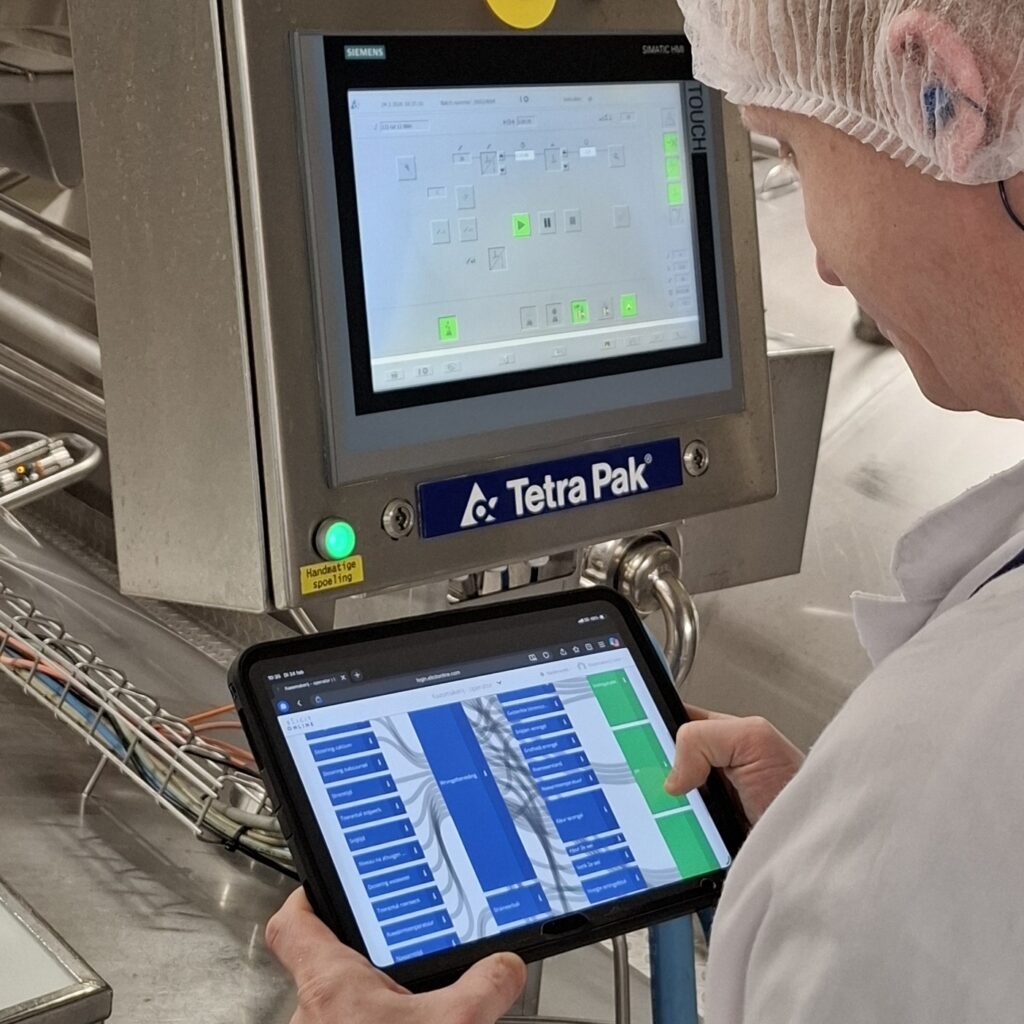
When the correct instructions, checks, and troubleshooting steps are directly available on the line, the difference between an experienced and a less experienced operator decreases.
Operators can take immediate action.
Small deviations are resolved more quickly.
And the line runs more consistently.
In conclusion
Most managers know exactly which people they cannot afford to lose. But what if you could secure their knowledge, so that every operator works like your most experienced people? Can you imagine what that would do for your OEE?