Casting legend Olle Lofgren departs for the snow, but his knowledge remains in Zutphen
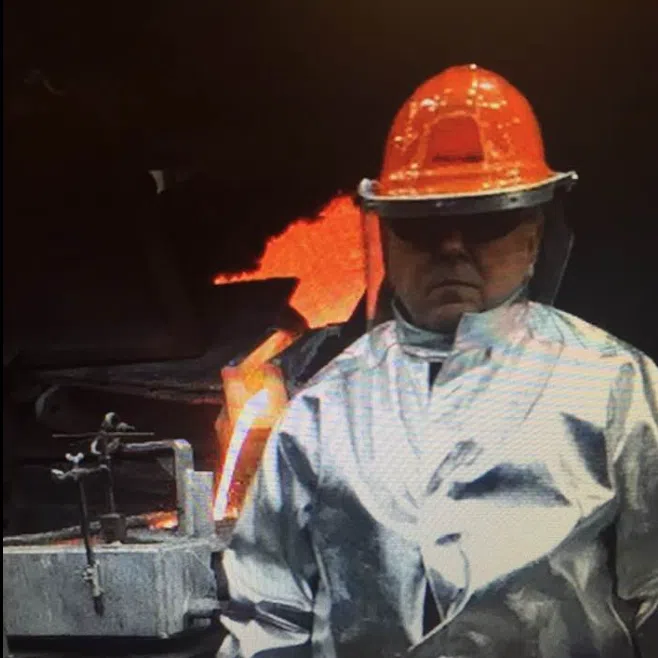
“Tuesday was my last day, and by that evening, I had already received the first phone call. I ended up coming in the next morning to resolve something after all.”
Olle Lofgren
Casting Specialist
“When we commissioned the strip caster, I was here day and night. Sometimes I even slept on the floor.”
Olle Lofgren
Casting Specialist
“Previously, knowledge was scattered across various training manuals, instructions, and experienced colleagues. Now, you simply have everything at hand on a tablet, organized in a logical model.”
Olle Lofgren
Casting Specialist
Hardly anyone in the world possesses more casting expertise than Olle Lofgren. But after more than 50 years in the metal industry, working in factories across the globe, the Swedish casting specialist is retiring from KME. Now, with the help of ELICIT, he is leaving his knowledge behind for future generations. Olle: “It was as if someone opened up my memory of the past decades.”
In Zutphen since childhood
Olle Lofgren (66) has little time to talk. The Swedish casting specialist has just finished his final working day, and his house is being cleared out. He is returning to his home country, saying farewell to Zutphen. “It is quite a significant moment. My father was already working in this factory in 1966, which was then part of Svenska Metallverken. Sometimes he took us along during summer holidays, and as a 7-year-old, I would walk among the machines. And since the 90s, I have, of course, been working there myself. Man… and how I worked there. When we commissioned the strip caster, I was here day and night. I sometimes slept on the floor.”
World traveler
Over the years, Olle would help build, operate, and optimize the unique brass strip foundry at the KME factory in Zutphen, using casting knowledge he acquired all over the world. First as an operator, later as a (quality) manager. “In 1988, I started in Zambia. That factory, close to the mines, was the second-largest source of income for the Zambian government at the time. President Kenneth Kaunda visited the factory in person. That machine ran 24 hours a day, 365 days a year. Looking back, it was quite a serious responsibility for a 28-year-old, haha.”
After Zambia came Spain, Wisconsin, Columbus, and Buffalo, where he was responsible for the group’s foundries worldwide: China, Thailand, Finland, Sweden, the Netherlands, and America.
Painfully honest troubleshooter
Olle made a name for himself as a troubleshooter who saw what others missed. In a foundry in Germany, he walked past a bronze casting machine and asked: “Do you not have quality issues at these two points on the strip?” Everyone remained silent. Three weeks later, the same team called him. The batches were indeed being rejected. It turned out that cooling channels were missing. “I could see that from the solidification pattern.”
In Buffalo, New York, he discovered that certain parts of the mold were receiving insufficient cooling. The metal did not solidify in the correct place, bled out underneath, and caused life-threatening steam explosions. Olle installed monitoring per line, and the problem disappeared.
His approach was the same everywhere: talk to operators, talk to technicians, talk to suppliers. Involve them in your reasoning and always be honest—even if it is sometimes a bit uncomfortable. On his last working day in Buffalo, an operator entered his office, closed the door, and said: “You were the worst asshole I worked with. But you were always honest.”
Unique knowledge
It was the combination of technical insight and directness with which he returned to Zutphen as a casting specialist. Here, he became responsible for the unique strip casting process that he had seen grow and knew inside out. For years, he used it to produce long strips of wafer-thin metal for the automotive, electrical, and electronics industries—efficiently and at top quality.
At KME, things were already well-organized. Training manuals, work instructions, documentation—everything was there. Except for the wealth of information that still resided in Olle’s head.
Nevertheless, Olle was already considering the generations after him. “I have always been focused on knowledge sharing. Everywhere I went, I left behind good procedures and instructions. At KME, that was already well-organized. Training manuals, work instructions, documentation—everything was there.” Yes, everything was there. Except for the wealth of information that still resided in Olle’s head. That unconscious assessment of the situation when the metal behaves just slightly differently. That single glance that spots quality deviations. Or the keen ear that hears when the machine sounds just a bit different than usual. But for that, KME found ELICIT.
‘As if someone opens your memory’
Knowledge analyst Hilbert from ELICIT interviewed Olle to capture that unique decision-making knowledge. The goal: to deliver a knowledge system that allows current and future casting specialists and operators to make the same considerations and choices as Olle during the casting process, from melting furnace to coiler. “Those were intensive interviews,” Olle recalls. “It is as if someone opens up your memory of the past 25 years: what you did, why you did it, what went wrong, and how you solved it. I was exhausted every time.”
Hilbert made an impression on him. “He always stayed strictly on track. From A to B, never deviating. Only the relevant information about the process. I am quite a storyteller, so that probably wasn’t easy for him.”
The result: Olle’s knowledge directly at hand
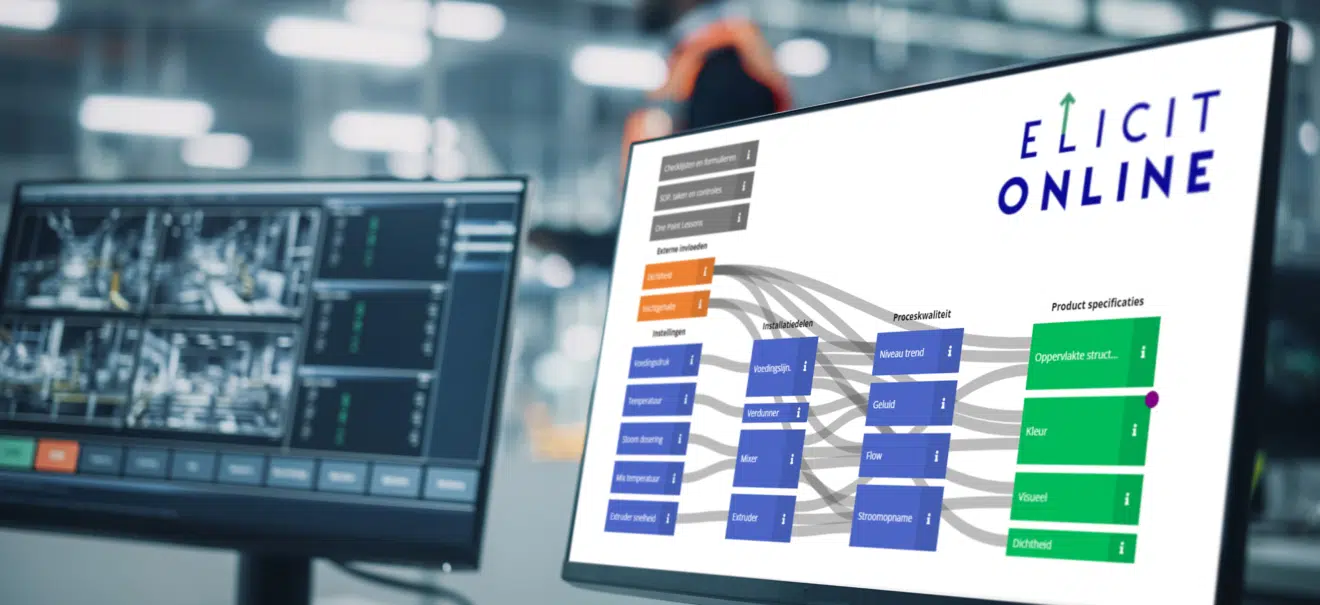
The result is impressive, says Olle. The ELICIT model is an interactive overview of your production process. If you click on a parameter, you immediately see how it relates to the rest. Does something deviate? Then the model shows you where to look, in what order, and what the best steps are. All based on Olle’s knowledge. “This is truly a good system. Easy to follow,” says Olle. “Previously, knowledge was scattered across various training manuals, instructions, and experienced colleagues. Now, you simply have everything at hand on a tablet, in a logical model. For new people, everything is ready for them to get started. That is very valuable.”
Peace and snow, or perhaps not
With the ELICIT model and the instructions as his legacy, Olle feels confident leaving KME behind. Although they still have to get used to it in Zutphen: “Tuesday was my last day, and by Tuesday evening, I had already received the first phone call. I ended up coming in the next morning to resolve something after all.”
But now he is stepping away, both literally and figuratively. With his wife (“Without her, this would never have been possible”), he is departing for the far north. His apartment in Västerås is being furnished, and until then, he is staying in his cottage on the border of Norway and Sweden, 600 kilometers northwest of Stockholm. “With 85 centimeters of snow and sunshine—wonderful. And the coming years? Sitting completely still is not my style. Consultancy requests from all over the world are already coming in. I don’t really want to fly too much anymore. But oh well, we shall see.”