Lemoine: Operators in control
“New operators have already used the knowledge file very intensively and can therefore start working independently sooner. The onboarding process has become significantly shorter as a result.”
“The cause-and-effect relationship is clearly visible and ensures rapid applicability of the knowledge. They can also easily add new knowledge, allowing the knowledge file to continue growing and improving.”
The result of all these actions is that the quality of the non-woven fabric has improved!”
Berry van de Hoop
Operations Manager Lemoine Holland
About Lemoine Holland
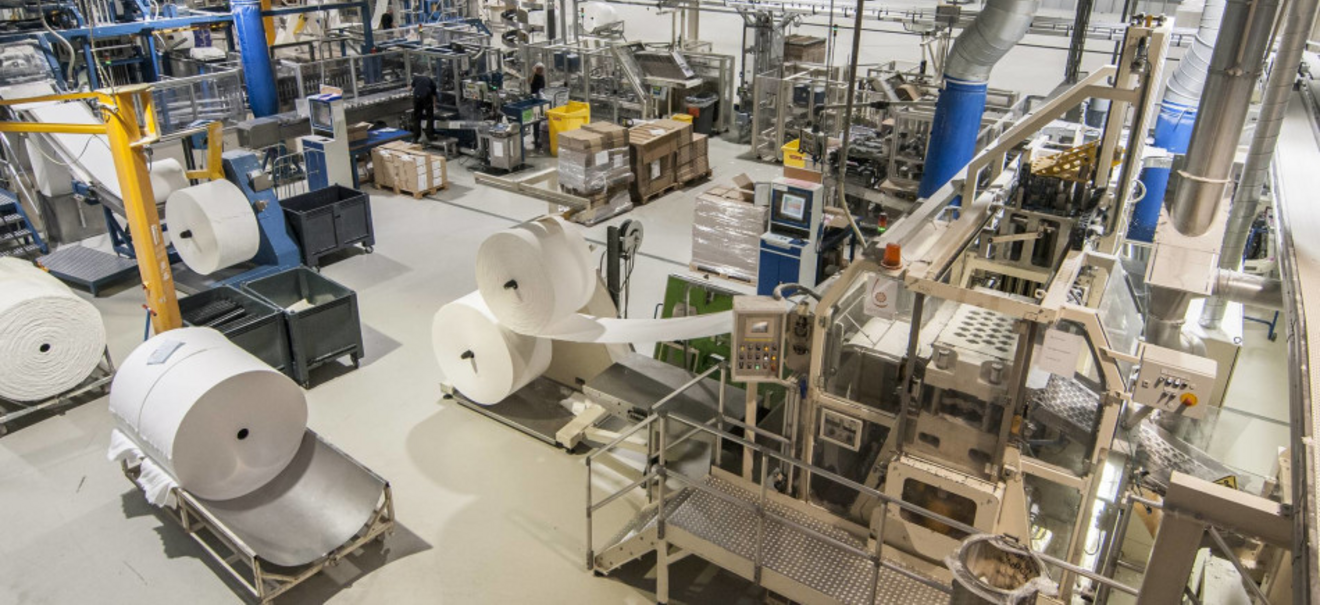
How do I get my operators to the level where they know what, how, and when to adjust? This was a common challenge that Lemoine Holland in Emst also faced. Lemoine Holland is part of the Groupe Lemoine and specializes in hygiene products. In Emst, various types of cotton pads are produced, which are punched from non-woven fabric. For the heart of the process, the production of the non-woven fabric, this challenge was addressed by combining task training according to Training Within Industry (TWI) with the capturing and transferring of experiential knowledge with ELICIT.
“Operating” with TWI
Lemoine Holland was already familiar with capturing and training tasks according to TWI and has its own TWI writers, trainers, auditors, and a TWI coordinator. To perform a task correctly, without errors, and in a standardized manner, the primary focus is on “operating.” This is trained through TWI. This concerns the execution of actions and tasks. But how do you then ensure that the operators are ‘in control’? In other words, how do they learn to master the process?
“Mastering” with ELICIT
Knowledge is often present in-house, but not always accessible and available to everyone. At Lemoine, the knowledge about the non-woven lines was also held in the minds of various experts: specifically in technology, engineering, and among several senior operators. In practice, it appeared that even among specialists, adjustments were made in different ways. But how do you extract this experiential knowledge from the minds of these experts, and what should the standard actually be? With the ELICIT software solution, Lemoine captured this valuable experiential knowledge independently, structuredly, and quickly. The expertise from different departments is bundled in the knowledge file. The knowledge file shows the essence of process and quality control in one overview, including the most important cause-and-effect relationships.
How does it work?
From the start, the new employee is trained in a predetermined number of tasks through TWI, so they know how all actions must be performed and can get to work in production. In the knowledge file, the experiential knowledge of the experts is bundled and calibrated. During production, the process must be adjusted regularly due to challenges in production. The employee knows how all tasks must be performed, but what should you do and when should this action actually be carried out?
For example: the employee measures the non-woven thickness and sees a deviation. In the knowledge file, they see which possible actions should be performed. it specifies the parameters within which you must adjust, the step size, and what the effect will be. For example, if the non-woven is too thin, you must adjust the dryer temperature (measurable after a few minutes) by a maximum of +/- 10 degrees around the recipe value, with a step size of 5°C. The effect of 5°C provides 0.5 mm more thickness. The employee has been trained on how to adjust this dryer through TWI. The most common malfunctions and disruptions are also included in the knowledge file. Every employee has been trained in all tasks in the same way using TWI. A more experienced employee can use the actions suggested by ELICIT to give less experienced employees concrete tasks, for example: adjust the oven in steps of 5 degrees. So, it is truly learning by doing!
A word from Lemoine
“New operators have already used the knowledge file very intensively and can therefore start working independently sooner. The onboarding process has become significantly shorter as a result. Besides the fact that it works very well for the new operators, the experienced operators are also very enthusiastic!”
The cause-and-effect relationship is clearly visible and ensures rapid applicability of the knowledge. They can also easily add new knowledge, allowing the knowledge file to continue growing and improving. “The result of all these actions is that the quality of the non-woven fabric has improved!” says Berry van de Hoop, Operations Manager Lemoine Holland.
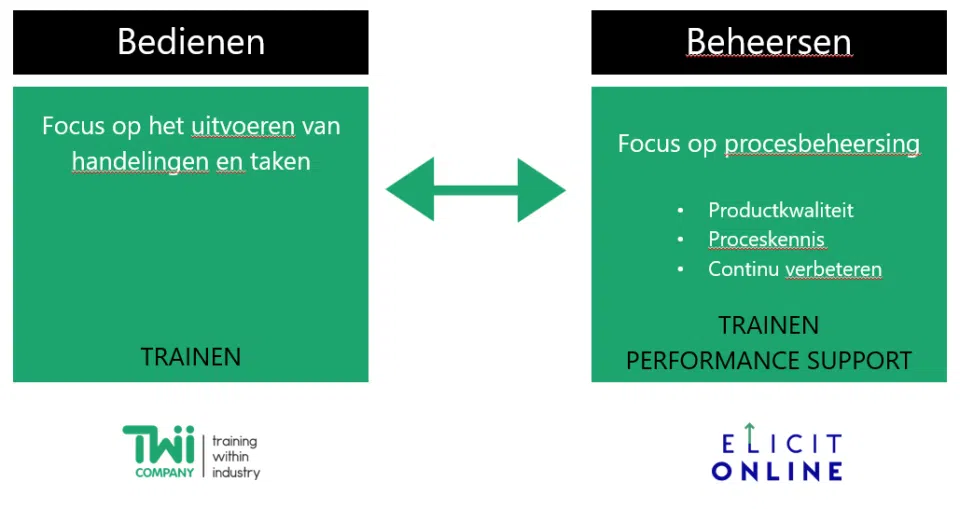
With this combination, both components of training (new) employees have been addressed and fulfilled: learning to “operate” with TWI and learning to “master” with ELICIT for product and process knowledge.