Your experienced operator is a bottleneck for your company (and this is why)
They are walking your shop floor: those few senior operators who know the machines like the back of their hand. If something goes wrong, their phone rings. Great to have such experienced people, right? Yes, until they leave, fall ill, or retire. Then it turns out your production stagnates completely without them. How can you prevent this?
What most companies do
Most manufacturing companies operate like this: experienced operators solve problems, while new operators shadow them and pick things up. Procedures are stored in SharePoint or a folder. And if something truly complex happens, you call the expert.
That method works, until it doesn’t.
Your hidden problem
Because what if your expert is suddenly on vacation for three weeks? Then a malfunction that normally takes 20 minutes suddenly takes four hours. Because no one else knows where to start.
Or worse: they retire. Every pattern they recognize, every decision they make intuitively: it walks right out the door. And you are left with the consequences.
We call this problem hidden dependency. You don’t notice it as long as everything runs normally; you only notice it when it’s too late. And then you are left with only two options:
- Trial-and-error by other operators (costs time, increases risk)
- Escalating to an external specialist (expensive, slow)
Neither of these options is acceptable when you have deadlines for a waiting customer.
“In the event of a malfunction or problem, operators were not always able to solve it independently. A few highly experienced operators, team leaders, and the production manager did have that knowledge. As a result, they were frequently overstretched.”
Raymond van Dijk, JDE Joure
It’s not about the expert, it’s about their knowledge
Your problem does not lie with the experts, as it is actually great that you have them. The problem is that their unique knowledge is not captured and available. Their expertise is, in fact, much more layered than a simple work instruction:
Layer 1: Procedures
Every expert knows the procedures. “Set the temperature to 180°C.” “Check the pressure every 30 minutes.” Most companies have these documented somewhere.
Layer 2: Decision logic
Almost no company has captured the second layer: the decision logic. “If you hear this sound at this temperature, it’s caused by air bubbles in the line.” “With raw material from supplier A, you need to set it 5 degrees higher than with supplier B.”
This is the knowledge that makes the difference between a junior and a senior operator. That isn’t in procedures. That is in their heads.
Layer 3: Pattern recognition
The third layer is also rarely captured. This is pattern recognition. Seeing a combination of signals and immediately knowing what is happening. “The machine is running 0.2 seconds slower, the temperature is stable, but the end product has a deviating color. This is due to wear on roller 3.” This knowledge is not in procedures. You learn this by experiencing it hundreds of times.
In short: the most essential process knowledge (layers 2 and 3) exists only in the expert’s head. And thus, every expert constitutes a potential bottleneck.
How this plays out in practice
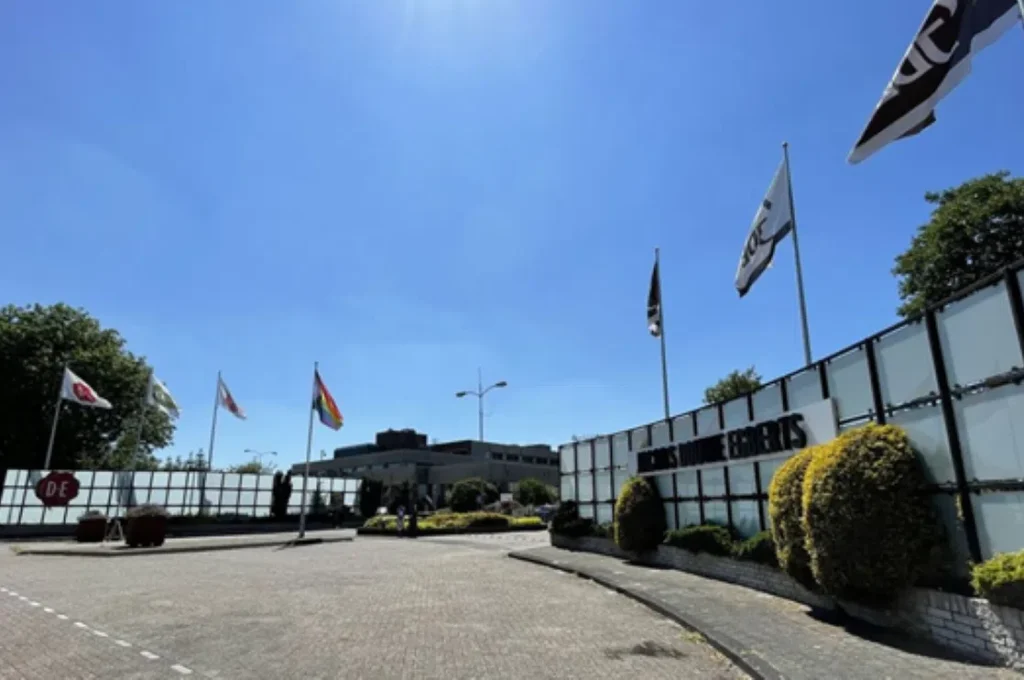
At JDE Joure, part of JDE Peet’s and producer of Douwe Egberts coffee among others, they saw this problem in the Liquid Packaging department. This is where a liquid coffee solution for the hospitality industry is packaged.
Team leader Raymond van Dijk: “In the event of a malfunction or problem, operators were not always able to solve it independently. A few highly experienced operators have the necessary knowledge, as do the team leaders and the production manager. As a result, they were frequently overstretched when problems occurred.”
The costs of hidden dependency (which you are already paying)
Dependency costs money, in many ways.
In time
How many hours per week does your best operator spend answering the same questions? Explaining how something works? Solving problems that others cannot? Those are hours they are not producing or optimizing.
In growth
How many orders have you already had to turn down because you don’t have enough people who can work independently? How many growth opportunities are you missing because training takes too long?
In risk
What does one hour of downtime cost? And how many hours of downtime do you risk if your expert unexpectedly becomes unavailable?
The solution: capture the knowledge of experts
JDE Joure decided to use ELICIT to capture the knowledge of experts. Through interviews, all layers of the expert’s knowledge were recorded and made accessible to colleagues via a knowledge system. An operator now knows exactly which “dials” they can turn, at what moment, and which tasks they can leave to the Technical Department.
Jan Jonker, operator with more than 30 years of experience: “Colleagues can now troubleshoot more independently. When I showed the old system to a new operator, it was difficult. But in ELICIT Online, you can click on a specific part and immediately see the relevant information.”
The result? Raymond van Dijk: “Where is the biggest gain? Fewer questions and shorter downtimes. We reach solutions faster and see fewer quality deviations. Unplanned stops are significantly shorter. We can resolve problems sooner, meaning large, long-lasting malfunctions occur less frequently.”

“Colleagues can now troubleshoot more independently. In ELICIT Online, you can click on a specific part and immediately see the relevant information.”
Jan Jonker, operator with more than 30 years of experience
Signs that it is time for action
Do you recognize at least two of these signs on your shop floor? Then you are also suffering from hidden dependency.
1. Your new operators are still not independent after months when deviations occur
They can follow the standard procedure, but as soon as something unusual happens, they have to wait for a senior. They don’t know when they are allowed to deviate from the procedure, which parameters are critical, or how to prioritize when multiple warnings occur simultaneously.
2. Your best operators are constantly interrupted with the same questions
“How do I solve this?” “What does this error message mean?” Your experts give the same explanation to different people every week and don’t get around to the work you actually need them for: optimizing, improving, and solving complex problems.
3. Malfunctions last longer when certain people are not there
A problem that normally takes 20 minutes suddenly takes two hours. No one knows where to start. Or operators try all sorts of things, which actually makes the problem worse or leads to quality deviations.
4. You cannot handle orders or growth because you cannot train fast enough
Every new production line or extra shift means new people. But who trains them? Your experienced operators are already overstretched. And even if you take the time, it takes months before someone can work independently. Growth is limited by training capacity.
5. You see quality deviations that are recognized too late
Junior operators see that something is wrong, but do not recognize what it means. They wait until the problem gets bigger or call for help too late. Where an experienced operator would have intervened at the first signs, production continues with deviations.
Are you too dependent on your experienced expert?
We would be happy to tell you how you can prevent these risks. Schedule an introductory meeting to discuss your situation. No obligations, just a casual conversation about what fits your production process.